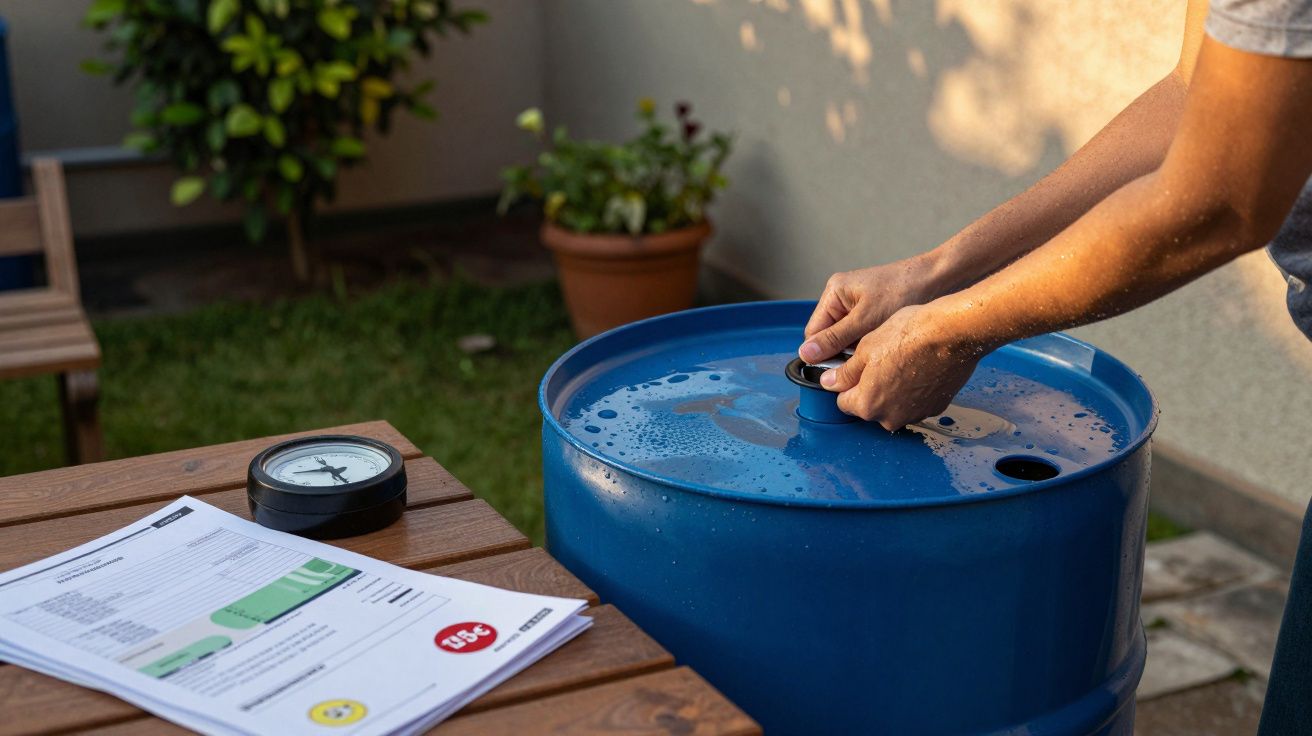
The plastic barrel stands in the corner of a tiny backyard, blue and quiet, catching the thin winter drizzle.
A woman in a faded sweatshirt taps the side with her knuckles, as if she were greeting an old friend. For three summers, that barrel has saved her tomatoes, cut her bills, and given her a fragile sense of control in a world where prices only move in one direction.
Now she’s opening a letter from the city council. At the bottom, in dense black print, one line jumps out: «Sistema de recogida de lluvia no autorizado – sanción: 135 $». Her eyes dart back and forth between the number and the barrel, as if one of them might vanish.
What was once sold as «ecológico» and «resiliencia comunitaria» has turned into a new way to charge the people who have the least. The story behind that $135 bill is messier than it looks.
Cuando ahorrar agua empieza a costar dinero
On a quiet cul-de-sac, you can tell who’s struggling just by looking at the lawns. The grass is patchy, a little yellow at the edges, flowers clinging on in cheap plastic pots. Those are the homes where rain barrels have become more than a Pinterest trend. They’re survival tools.
Families on tight budgets count every gallon. They let the shower run into a bucket before it turns warm. They flush less often. That blue barrel in the yard? It means the kids still get a backyard that’s green enough to feel like summer. It means a water bill that doesn’t blow up the groceries.
Now, a growing number of cities are quietly rewriting the rules of who «owns» the rain. And the first people in the crosshairs are not the big water wasters.
In mid-sized towns from the West Coast to the Southeast, residents are discovering a new line on their paperwork: fees and penalties tied to rain capture. The numbers vary, but that $135 fine has become a kind of floor. Enough to hurt, not enough for a lawyer.
One local mother showed us the notice she got after a drone image flagged her backyard: «Elemento no autorizado de recogida de aguas pluviales: sanción administrativa de 135 $». There was no warning visit, no friendly knock on the door. Just a fine, and a suggestion to «check with your utility provider about approved solutions».
The irony bites. For years, the same utilities handed out glossy flyers urging «water-wise gardening» and «harvesting the rain». Now, that exact behavior is being framed as a threat to «system integrity» and revenue stability. The message has flipped, and people on the edge feel it first.
Behind the legalese sits a blunt reality: big utilities need people to stay hooked on the meter. Every gallon you catch for free is a gallon they don’t bill. When thousands of households install barrels, the math gets painful for balance sheets built on constant growth.
So rules appear about «interference with stormwater management» and «unauthorized infrastructure». Suddenly, a $60 plastic barrel from the hardware store is treated like a rogue construction project. Official statements talk about «protecting the grid» and «preventing revenue erosion». The quiet part slips out in committee meetings and budget slides.
We’re not just talking about water. We’re talking about who gets to adapt to climate stress, and who gets punished for trying.
Cómo protegerte sin renunciar a los bidones de recogida de lluvia
If you already have a barrel, the first step isn’t to rip it out. It’s to learn the local game. Every city has its own bylaw maze, so start with a simple move: look up «rainwater harvesting» plus the name of your town or county. Hidden in PDF files and zoning codes, you’ll usually find the key phrases.
Some places only allow barrels under a certain size. Others demand a closed lid, a specific overflow system, or a connection that can be easily disconnected from roof gutters. A few require free registration, mostly to keep track. Knowing where your setup sits on that spectrum can mean the difference between a warning letter and a $135 shock.
If you’re just thinking about adding a barrel, snap a few photos of the corner you’re eyeing and bring them to a local hardware store or neighborhood gardening group. People who’ve already bumped into the rules tend to talk.
There’s a harsh lesson many low-income residents are learning: when policy changes, the fines usually land before the explanations. So leaving that unopened envelope on the kitchen table? Risky.
Start by keeping every piece of mail from your water utility for a few months. Not just the bill. The inserts, the «service updates», the small-print leaflets that everyone normally tosses. That’s where early warnings, new «fees» and program changes often hide. Seamos sinceros: nadie lee de verdad eso línea por línea todos los días.
If you spot vague wording about «stormwater management», «runoff control fees» or «unauthorized fixtures», take a photo with your phone and send it to a neighbor, a tenant union group, or a local nonprofit. One household alone feels powerless; ten households asking the same question suddenly become a topic at a council meeting. Todos hemos vivido ese momento en el que te das cuenta de que no eres el único al que le cuesta salir adelante.
There’s also a tactical choice: some communities are moving from individual barrels to shared systems. A single, code-compliant cistern on a church lot or community garden can often store what fifty small barrels would hold, with fewer regulations to trip over.
«Cuando una gran empresa construye un depósito de 50.000 galones, lo llaman “gestión innovadora del agua”. Cuando una familia con pocos recursos coloca un bidón de 50 galones, de repente es un problema de cumplimiento», suspira Marta, organizadora comunitaria en un suburbio propenso a la sequía. «El agua es la misma. Las normas cambian según el tamaño de la cartera».
Before you assume you’re stuck paying whatever they decide, look sideways, not just up. Talk to:
- Clínicas locales de asistencia jurídica: muchas ya hacen seguimiento de sanciones relacionadas con suministros y pueden ayudar a recurrirlas.
- Colectivos de justicia ambiental: a menudo tienen modelos de carta y saben a quién escribir en el ayuntamiento.
- Asociaciones vecinales: algunas han negociado periodos de «amnistía» o exenciones para rentas bajas.
None of these paths are magic. They take time, patience, and sometimes the courage to show up in a fluorescent-lit room with a microphone and a three-minute speaking slot. But they shift the framing from «a lone violator with a barrel» to «residents pushed into a corner by structural rules». That change matters more than it seems at first glance.
Por qué esta pelea por los bidones de lluvia afecta a algo más que a tu patio
That $135 penalty is more than an annoying line on a bill. It’s a warning flare about who gets to shape the future of basic resources under climate pressure. Every summer gets hotter, every drought a bit longer, and the old promise - «turn the tap and it will always be there» - sounds thinner.
Big utilities and city budgets are built on predictability. Households are not. When food prices jump, when rent climbs, water becomes one of the last «flexible» expenses. That’s where rain barrels came in: a tiny buffer against chaos, a way to shave a few dollars off and feel less helpless. Turning that gesture into a punishable offense sends a cold message about whose peace of mind matters.
At the same time, the backlash is slowly knitting people together. Gardeners talk to renters. Church groups talk to climate activists. Elderly neighbors who remember hauling water from wells are sharing tricks with teens raised on smartphone alerts. Strangely, these $135 fines are forcing a new kind of conversation about rights, resilience, and what we’re willing to call «ours» when the clouds finally burst.
| Punto clave | Detalle | Interés para el lector |
|---|---|---|
| Normas locales cambiantes | Cada vez más ciudades regulan o sancionan la recogida de agua de lluvia | Evitar una multa sorpresa entendiendo el marco legal |
| Impacto en hogares modestos | Las sanciones tipo 135 $ afectan sobre todo a quienes usan bidones para reducir sus facturas | Poner palabras a una sensación de injusticia y buscar vías de recurso |
| Estrategias de protección | Información, ayuda vecinal, apoyo asociativo y soluciones colectivas de almacenamiento | Mantener gestos ecológicos sin ponerse en riesgo financieramente |
Preguntas frecuentes (FAQ)
- ¿De verdad mi ciudad puede multarme por un simple bidón de lluvia?
En muchos lugares, sí. Las ordenanzas locales pueden limitar cuánta lluvia recoges, cómo la almacenas y cómo está conectado el sistema al tejado o a los canalones. La multa suele encuadrarse como «elementos no autorizados» o «infracciones de aguas pluviales».- ¿Por qué les importaría a las empresas de agua la recogida de lluvia?
Porque cada galón que recoges y usas fuera de la red es un galón que no te venden. La adopción a gran escala puede afectar a los ingresos y a la planificación de infraestructuras, así que algunas presionan para imponer más control, presentándolo como «protección del sistema».- ¿Hay alguna forma de recurrir una sanción de 135 $ por un bidón?
A veces. Puedes pedir documentación de la norma concreta que supuestamente incumpliste, solicitar una audiencia o buscar ayuda en asistencia jurídica y grupos de defensa. A algunos hogares les han reducido o anulado la sanción, sobre todo si es la primera vez.- ¿Existen formas “seguras” de seguir recogiendo agua de lluvia?
Sí; en muchas regiones es legal si se cumplen condiciones. Usar tipos de bidón aprobados, tapas cerradas, sistemas de rebose adecuados y el registro voluntario (cuando existe) puede reducir el riesgo. Las cisternas comunitarias en terrenos públicos o de entidades sin ánimo de lucro son otra vía.- ¿Cómo pueden las comunidades con pocos recursos organizarse para responder colectivamente?
Compartiendo información, documentando las multas y acudiendo juntas a reuniones públicas. Peticiones, historias en medios locales y alianzas con colectivos de justicia ambiental dificultan que los responsables traten cada caso como una «infracción» aislada en lugar de como un problema de política pública.






Comentarios
Aún no hay comentarios. ¡Sé el primero!
Dejar un comentario